
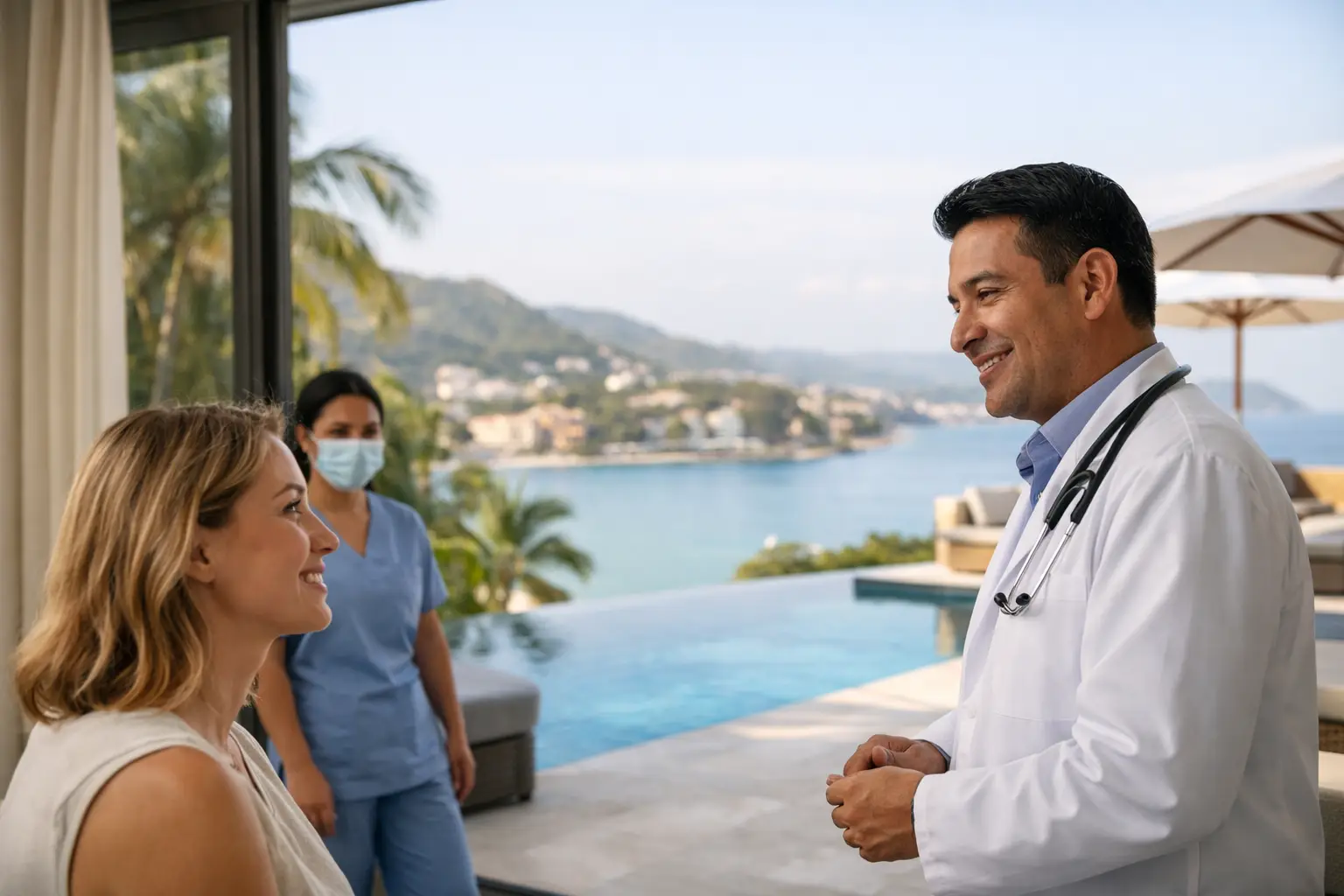
Your knee should not need a frequent-flyer account just to receive timely care. Yet for many Americans and Canadians, that is exactly where the math leads. The question of why Mexico became a top choice for medical treatments is not only about a lower bill. It is about access, proximity, private healthcare options, recovery in a desirable climate, and a travel infrastructure built to move millions of people efficiently.
For Riviera Maya real estate investors, this trend deserves attention. Medical travel is not a reason to buy a property on its own, and it should never be treated as a guaranteed source of rental income. But it is one more demand driver in a region already supported by tourism, remote work, retirement migration, and expanding infrastructure.
Why Mexico Became a Top Choice for Medical Treatments
Mexico’s appeal begins with a practical gap north of the border: patients can face long waits, high out-of-pocket costs, limited insurance coverage, or all three. For treatments such as dental work, orthopedic procedures, bariatric care, cosmetic surgery, fertility services, and diagnostic testing, private clinics in Mexico can offer materially lower prices than comparable self-pay options in the United States. Depending on the procedure and provider, patients often see quoted savings in the 40% to 70% range.
Cost is only part of the story. Mexico is close. A direct flight from many U.S. cities to Cancún takes roughly two to four hours, making it easier for patients to travel with a spouse, adult child, or friend. Cancún International Airport handled more than 30 million passengers in 2024, a useful indicator of the connectivity that supports both visitors and property demand throughout the Riviera Maya corridor.
Private hospitals and specialty clinics have also expanded in major Mexican cities and resort regions. Many serve international patients with bilingual staff, modern imaging, digital records, recovery coordination, and relationships with nearby hotels or residences. Quality varies by facility and specialty, of course. A polished website is not a substitute for confirming physician credentials, hospital accreditation, procedure-specific experience, and a written care plan.
The strongest medical-travel decision is not, “Where is it cheapest?” It is, “Where can I verify the right clinical team, total cost, follow-up plan, and travel logistics?” That distinction protects both your health and your budget.
The Riviera Maya Advantage Is Recovery, Not Just Treatment
Medical care may happen in a hospital, but recovery happens somewhere. That is where destinations such as Cancún, Playa del Carmen, Puerto Morelos, and Tulum enter the conversation. Patients traveling for outpatient care or procedures with a recovery period may prefer a furnished condo or managed residence over a conventional hotel room, especially when traveling with family.
The region offers a familiar international environment, access to airports, private transportation, groceries, pharmacies, wellness services, and a large inventory of short- and medium-term accommodations. Retirees also find the lifestyle equation compelling: warm weather, an active expat community, and a cost of living that can be more manageable than many Canadian and U.S. cities.
That does not mean every vacation rental is a medical-recovery property. A fourth-floor walk-up with a nightclub downstairs is not suddenly an ideal post-procedure stay because it has a plunge pool and good social media. Investors should think in operational terms: elevator access, quiet bedrooms, reliable Wi-Fi, well-equipped kitchens, proximity to services, responsive property management, and flexible stay policies.
Demand Signals That Matter to an Investor
Medical travel adds a potentially valuable layer to an already diversified guest base. The best investment thesis is not dependent on one traveler type. In Riviera Maya, a well-positioned property may appeal to leisure visitors, snowbirds, digital professionals, future retirees, family travelers, and longer-stay guests seeking wellness or treatment-related accommodations.
| Demand driver | What it can support | Investor question to ask | |—|—|—| | Leisure tourism | Short stays and seasonal occupancy | Is the location convenient to beaches, dining, and transportation? | | Retirement migration | Longer stays and repeat visits | Does the unit work comfortably for a 30- to 90-day stay? | | Medical and wellness travel | Accompanying guests and recovery stays | Is the home quiet, accessible, and professionally managed? | | Infrastructure investment | Improved regional access over time | Does the project benefit from real connectivity, not just marketing language? |
This is where sober analysis wins. Medical travel can help broaden occupancy patterns, but it cannot compensate for a poor location, weak building management, unrealistic rental projections, or a developer without a credible delivery record.
What the Trend Means for Real Estate Buyers
For foreign buyers, the larger lesson is that Mexico is increasingly a lifestyle and services destination, not simply a beach vacation destination. That evolution can support long-term residential demand. It also strengthens the case for geopolitical diversification: owning an asset outside your home country can give you another place to live, spend time, earn income, or retire, subject to your personal tax and legal planning.
Compared with many markets in Canada and the United States, buyers in Quintana Roo may find a lower entry point for a newer condominium, particularly in pre-sale developments. Pre-sale can offer staged payment structures and the potential for appreciation as a project is completed, but it carries real construction, delivery, and liquidity risk. You need to assess permits, contracts, the developer’s track record, maintenance fees, projected operating costs, and the specific neighborhood supply pipeline.
Rental returns should be modeled conservatively. In strong Riviera Maya locations, investors may target net-yield ranges of roughly 6% to 12% after operating expenses, depending on the property, seasonality, management quality, financing, and occupancy. Those figures are not promises. They are a starting point for due diligence.
A professional property management company can make or break the outcome. Ask how it prices nightly rates, handles guest screening, responds to maintenance issues, reports revenue, manages local taxes, and protects the unit during low season. The company that promises 90% occupancy before reviewing your floor plan is selling optimism, not operations.
Buying Safely as a Foreigner
Foreigners can legally purchase property in Mexico. In the restricted zone, which includes coastal areas such as the Riviera Maya, a non-Mexican buyer typically acquires residential property through a fideicomiso, a bank trust that grants the buyer beneficial rights to use, rent, sell, improve, and pass on the property. It is a recognized structure, but it must be set up correctly.
Your acquisition team matters. Work with an experienced real estate advisor, a reputable notario, and appropriate legal and tax professionals who understand cross-border ownership. A notario is a public official with a central role in verifying and formalizing Mexican property transactions. Your advisor should also help you verify title, permits, condominium rules, delivery obligations, and closing costs before you commit funds.
The five mistakes foreign buyers most often make are rushing because they fear missing out, relying on verbal promises, confusing gross rent with net income, skipping independent due diligence, and choosing a property management company after closing rather than before. None of these errors is glamorous. All of them are expensive.
Your Investor Takeaway
The medical-treatment trend reinforces a broader investment reality: people are choosing Mexico for practical life reasons, not only for a one-week escape. Healthcare access, cost-of-living advantages, air connectivity, retirement flexibility, and resort-style living create a deeper pool of potential residents and guests.
If you are weighing a purchase in Playa del Carmen, Tulum, Cancún, or another Riviera Maya market, start with your objective. Are you building rental income, planning a future retirement base, diversifying geographically, or combining all three? The right property strategy changes with the answer.
To clarify your starting point, take the Investor Readiness Scorecard. It can help you identify the financial, legal, and operational questions to resolve before you begin evaluating opportunities.
Frequently Asked Questions
Is Mexico safe for medical treatments?
Mexico has highly capable private hospitals and specialists, but standards and patient experience vary by provider. Verify the doctor’s credentials, the facility’s accreditation, the treatment plan, complications protocol, and follow-up arrangements. Do not make a decision based solely on price or online reviews.
Why do Americans and Canadians seek medical care in Mexico?
The main reasons are lower self-pay costs, faster access to some procedures, proximity, direct flights, and the ability to combine care with recovery in a comfortable destination. Insurance coverage and the type of treatment can change the calculation significantly.
Can medical tourism improve Riviera Maya rental income?
It can broaden the audience for furnished, accessible, well-managed properties, especially for medium-length stays and accompanying family members. It should be treated as a secondary demand driver, not a guaranteed occupancy strategy. Location, unit quality, pricing, and management remain the core variables.
Can a foreigner buy property in the Riviera Maya?
Yes. Foreign buyers commonly use a fideicomiso for residential property in the coastal restricted zone. Before purchasing, consult a qualified notario and cross-border tax advisor to understand the ownership structure, transaction costs, and reporting obligations that apply to you.
The Riviera Maya is becoming more connected, more internationally relevant, and more useful as a place to live, not just visit. With continued infrastructure investment and global events such as the 2026 FIFA World Cup increasing attention on Mexico, well-researched opportunities may not remain overlooked for long. Your advantage is not rushing. It is getting informed early enough to choose carefully.