
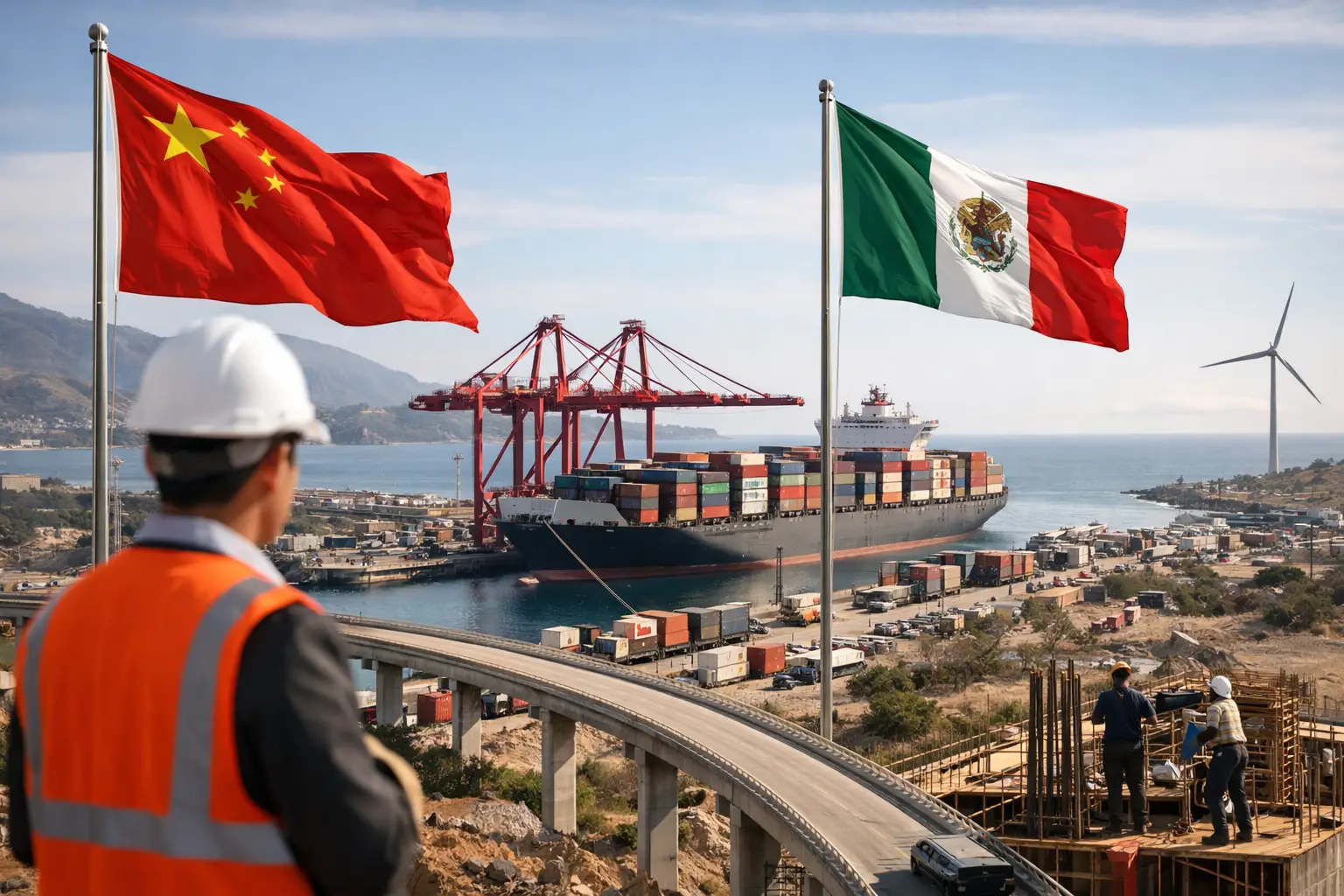
You are not imagining it – when ports, industrial corridors, rail links, and logistics hubs start expanding, real estate investors should pay attention before the headlines get crowded.
If you have been asking why china has been build many infrastructure in mexico, the short answer is this: geography, trade access, manufacturing shifts, and long-term influence. Mexico gives China something strategically valuable – proximity to North American markets, access to Pacific and Atlantic trade routes, and a growing role in global supply chains. For you as an investor, the more useful question is what that means for property demand, regional growth, and where infrastructure can quietly lift land and housing values over time.
This is not just a geopolitics story. It is a capital flow story. And capital tends to leave footprints in roads, ports, industrial parks, housing demand, and eventually residential real estate.
Why China has built infrastructure in Mexico
China does not invest in infrastructure abroad by accident. It usually follows a familiar logic: secure trade routes, improve logistics, deepen commercial relationships, and place capital where growth can compound over years, not quarters.
Mexico fits that logic well. It sits next to the United States, has trade agreements that matter globally, and has become more attractive as companies rethink how far away they want production to be. Nearshoring has changed the conversation. Businesses that once depended heavily on Asia alone are spreading operations across multiple regions, and Mexico has become one of the clearest beneficiaries.
That does not mean every project is Chinese-owned or that China is dominating Mexican infrastructure. It means Chinese capital, engineering capacity, equipment supply, and commercial interest have increasingly aligned with Mexico’s need for better logistics and industrial connectivity. Sometimes that looks direct. Sometimes it is more indirect through partnerships, supply contracts, or participation in broader development ecosystems.
The investor takeaway is simple: infrastructure is rarely about concrete alone. It is about reducing friction. When goods move faster, labor markets expand, tourism becomes easier to support, and secondary real estate demand often follows.
The real reasons behind Chinese infrastructure interest
Mexico is a gateway to North America
For global manufacturers and exporters, Mexico offers something few countries can match: lower production costs than the U.S. in many sectors, combined with access to the U.S. consumer market. That is powerful. If you are moving products, every hour saved in shipping, customs handling, and inland transport matters.
Infrastructure helps make that advantage real. Ports, freight rail, highways, and industrial nodes lower the cost of doing business. For Chinese firms looking to stay close to North American demand, Mexico is not just a destination. It is a platform.
Supply chains are shifting
Since 2020, companies have become far more sensitive to supply chain risk. Distance, bottlenecks, and dependence on one geography all became more expensive. Mexico’s manufacturing sector has benefited from that shift, especially in automotive, electronics, appliances, and industrial components.
When manufacturing expands, infrastructure spending usually follows. Then housing demand often follows that. Workers need places to live. Managers relocate. Service businesses grow around logistics and employment centers. That pattern is not identical in every state, but it is consistent enough that investors should not ignore it.
Infrastructure creates influence
There is also a strategic layer. Countries that help finance, build, or supply infrastructure often gain commercial leverage and deeper economic relationships. That is true globally, not just in Mexico.
This is where nuance matters. Infrastructure investment can bring jobs, better connectivity, and growth. It can also raise questions about dependency, local control, and political sensitivity. So the story is not purely bullish or purely skeptical. It depends on the project, the financing structure, and whether local economic benefits outlast the construction phase.
Why this matters for Mexican real estate investors
If you invest only after a market feels obvious, you usually pay for that certainty with a higher entry price.
That is why the infrastructure conversation matters. Government spending, foreign capital, and trade-driven development can reshape where demand appears first. In Mexico, those shifts do not benefit every location equally. Industrial corridors may move first. Port cities may move differently. Tourism markets can benefit when airports, roads, and public works improve accessibility and confidence.
For residential investors, the Riviera Maya is a different but connected case. The region is not being driven by Chinese infrastructure in the same direct way as industrial states, yet the broader logic is similar: once infrastructure improves mobility, tourism capacity, and business confidence, real estate tends to gain a stronger base. Quintana Roo has continued to attract domestic migration, international buyers, and tourism-linked development, and infrastructure has played a big role in that expansion.
A useful benchmark: in high-demand Riviera Maya submarkets, well-positioned rental properties can target net yields in roughly the 6-12% range depending on location, occupancy, management quality, and whether you buy pre-sale or stabilized inventory. Not every property will hit the top of that band. The gap between average and excellent execution is real.
Why china has been build many infrastructure in mexico and what it signals
The phrase why china has been build many infrastructure in mexico may sound awkward, but the underlying concern is smart. You are really asking whether foreign infrastructure interest is a signal of confidence in Mexico’s long-term growth.
In many cases, yes. Infrastructure capital tends to go where trade, population growth, and business activity have room to expand. Investors do not pour billions into logistics, transport, and industrial support systems because they expect stagnation.
Still, you want to separate macro confidence from local deal quality. A strong national trend does not automatically make every condo, parcel, or development a good investment. This is where many foreign buyers get tripped up. They hear a big story, then buy the wrong asset.
In Mexico, your edge comes from matching the macro trend to the micro decision. In practical terms, that means checking title structure, understanding the fideicomiso if you are buying in the restricted zone, reviewing developer track record, estimating true carrying costs, and stress-testing rental assumptions with conservative occupancy.
That is not fear-based investing. It is disciplined investing.
The Riviera Maya angle most buyers miss
A lot of foreign investors focus only on beach appeal. Fair enough – turquoise water is a persuasive salesperson. But serious money follows infrastructure and demographics, not just postcard aesthetics.
In the Riviera Maya, infrastructure upgrades have helped support airport connectivity, tourism volume, labor mobility, and broader market visibility. That matters because a residential investment here often sits at the intersection of lifestyle demand and income potential. You are not only buying a place people want to visit. You are buying into a region with long-run growth drivers.
Compared with many Canadian and U.S. markets, entry costs can still be lower, property taxes are often lighter, and the cost of living can be meaningfully more favorable. That does not remove complexity. You still need to understand closing costs, trust structures, tax reporting, and remote property management. But the economics are what keep attracting buyers who feel squeezed at home.
If you are looking at pre-sale condos in Tulum or Playa del Carmen, infrastructure becomes even more relevant because future value depends heavily on the area’s ability to absorb more residents, tourists, and services. Pre-sale can offer strong upside, but only if the location, developer execution, and delivery timeline hold up.
What to watch before you invest
The best response to global infrastructure trends is not excitement alone. It is selectivity.
Watch where transport upgrades are improving accessibility. Watch where employment growth is creating durable housing demand. Watch whether local inventory is rising faster than end-user demand. And if you are buying as a foreigner, build your team carefully. A trusted advisor, a qualified notario, and a tax professional matter more than a glossy brochure ever will.
If you want a practical next step, review current pre-sale opportunities with a growth lens, not just a lifestyle lens. You can browse available options at dsinvsolutions.com/find-your-property and compare locations based on demand, infrastructure support, and long-term rental potential.
FAQ
Is China buying up all of Mexico’s infrastructure?
No. China has shown interest in selected projects, partnerships, and trade-related infrastructure, but Mexico’s infrastructure landscape remains broad and shaped by many domestic and international players.
Does foreign infrastructure investment raise property values in Mexico?
It can, but not evenly. Property values tend to benefit most where infrastructure improves access, jobs, tourism capacity, or logistics relevance. Local supply and execution still matter.
Is it legal for Americans and Canadians to buy property in Mexico?
Yes. Foreigners can buy property in Mexico, including in coastal areas, usually through a fideicomiso trust in the restricted zone. You should always confirm structure and process with a qualified notario and legal professional.
Is Riviera Maya real estate connected to these global trends?
Yes, indirectly. Riviera Maya growth is more tied to tourism, migration, and regional infrastructure than to industrial trade corridors, but the same principle applies: infrastructure supports demand and confidence.
What is the biggest mistake foreign buyers make?
They buy based on emotion first and verification second. Market momentum is helpful, but your returns depend on asset selection, legal structure, and realistic underwriting.
Markets usually reward the investor who gets there prepared, not the one who gets there late. As infrastructure, migration, and international capital keep reshaping Mexico, Riviera Maya remains one of the few places where lifestyle appeal and wealth-building potential still meet in the same conversation. The window is still open, but it does not stay wide forever.