
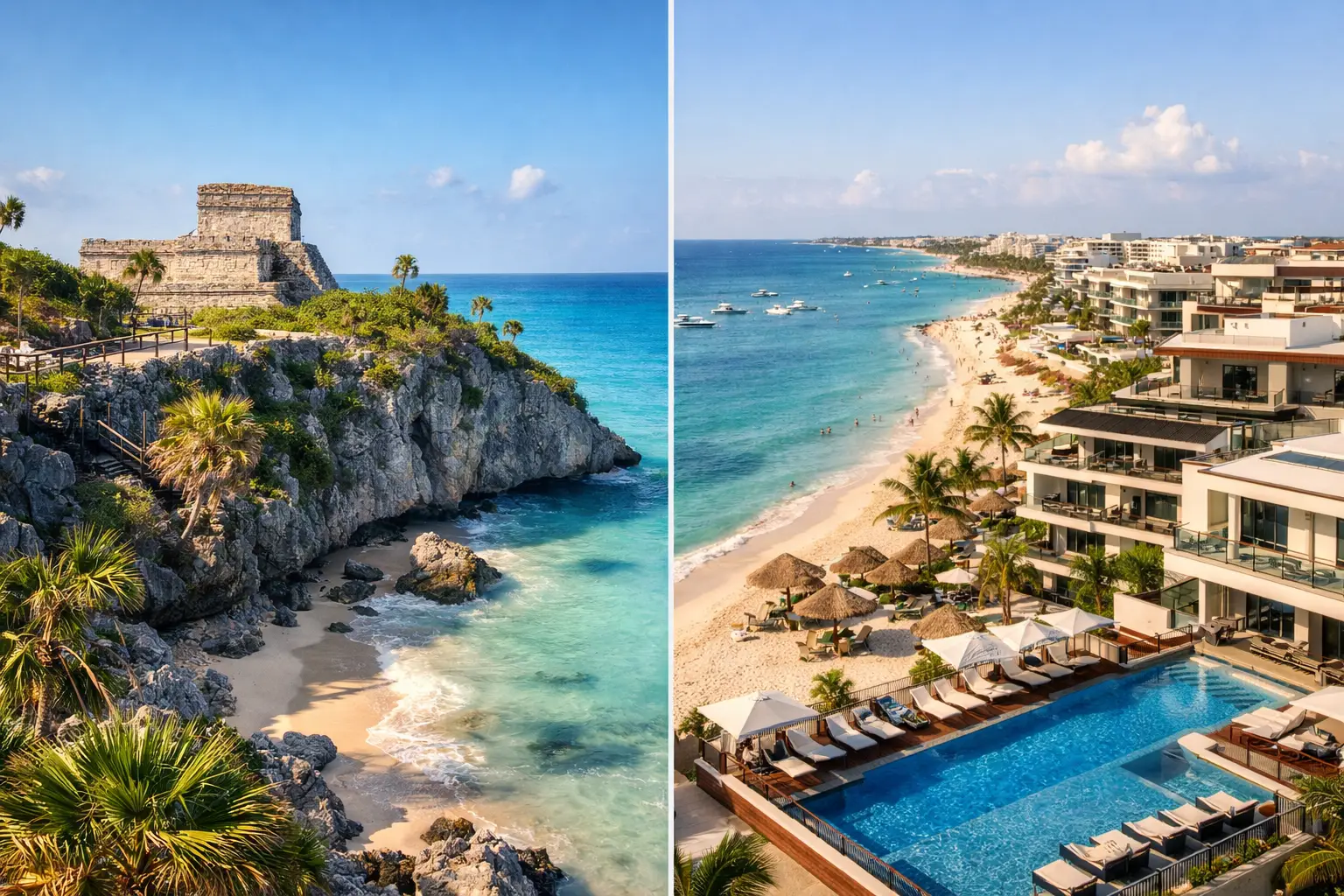
You can find a beautiful pool in both markets. The harder question is whether that pool will help fund your retirement, or simply become the most expensive place you have ever taken a vacation photo.
Tulum versus Playa del Carmen is not a contest between a bohemian beach town and a more established coastal city. For a foreign buyer, it is a decision about demand drivers, operating complexity, liquidity, lifestyle fit, and the role Mexico plays in your broader wealth plan.
Both markets sit in the Riviera Maya growth corridor and can serve as a second home, a rental asset, or a geographic diversification strategy. Yet they reward different buyer profiles. Playa del Carmen generally offers a deeper year-round rental base and easier day-to-day living. Tulum offers a more distinctive brand, greater sensitivity to development quality, and a potentially higher-upside pre-sale story when the numbers and location are right.
Tulum versus Playa del Carmen: the investor view
The most useful way to compare these markets is to start with what creates demand. Playa del Carmen is an operating city as much as it is a resort destination. It has established neighborhoods, schools, restaurants, medical services, coworking spaces, ferry access to Cozumel, and a large community of residents who live there beyond high season. That supports a mix of vacation rentals, medium-term stays, and long-term tenants.
Tulum is a global lifestyle brand with a different rhythm. Its appeal is design-led, wellness-oriented, nature-adjacent, and highly visual. That makes it especially attractive to travelers seeking a curated experience and to buyers who want a personal-use property that can also generate income. It also means competition is sharper: the property’s concept, finishes, access, management, and guest experience matter enormously.
A practical market statistic: professionally managed Riviera Maya vacation rentals often target net yields in the 6% to 12% range, after operating expenses, depending on purchase basis, occupancy, nightly rate, building rules, and management execution. That is a range, not a promise. A condo with a glamorous render but weak access or heavy monthly costs can underperform a less dramatic unit in a well-connected Playa del Carmen neighborhood.
| Decision factor | Tulum | Playa del Carmen | |—|—|—| | Rental demand | Tourism-led, experience-focused | Tourism, expat, local and medium-term demand | | Best fit | Lifestyle investor with patience and strong operator | Buyer seeking versatility and established services | | Pre-sale profile | More choice, higher need for project screening | Selective opportunities in a more mature market | | Remote ownership | Requires excellent management and due diligence | Often simpler due to deeper service infrastructure | | Exit strategy | Can be compelling, but product differentiation matters | Broader buyer pool and practical resale appeal |
Playa del Carmen: income consistency and livability
Playa del Carmen tends to suit buyers who want a property to work in more than one scenario. You may use it for several weeks each year, rent it short term during peak travel periods, and still have a credible medium-term rental option for remote professionals, seasonal residents, or relocating families.
The city’s density is an advantage when chosen carefully. Walkability, proximity to the beach, access to the highway, grocery stores, and neighborhood character directly affect rental demand. A property that is five minutes farther from practical amenities can feel like a completely different investment, especially for guests who do not plan to rent a car.
For Canadians and Americans comparing Mexico with home markets, this flexibility matters. In many Canadian and U.S. cities, high acquisition costs, financing expenses, property taxes, and modest rent-to-price ratios can make cash flow difficult to achieve. Riviera Maya ownership does not eliminate expenses or risk, but it can introduce a different demand profile and a lower entry point in certain segments. Your analysis should compare net income after management, maintenance, utilities, reserves, and taxes in both jurisdictions, not just headline rent.
Playa del Carmen is also a strong choice for retirement planning. The cost of living can be materially lower than major North American metro areas, but it varies with your lifestyle, health insurance needs, vehicle use, and preference for imported goods. Buyers who expect Mexico to be inexpensive in every category can be surprised. Buyers who plan realistically often find a compelling balance of services, community, climate, and financial breathing room.
Tulum: brand power with more variables
Tulum can be the right investment when you understand what guests and future buyers are paying for: experience. In this market, architecture, landscaping, wellness features, design identity, and proximity to the right attractions can influence both pricing power and occupancy.
That brand power does not make every Tulum condo equal. New supply has created real opportunity, particularly in pre-sale, while also raising the bar for diligence. Before committing, examine the developer’s delivery record, construction schedule, land and permit documentation, homeowners association structure, projected operating costs, and rental restrictions. Ask how the building will compete after several nearby projects deliver at the same time.
Pre-sale investing can allow you to enter before completion and potentially benefit from appreciation as a project matures. It can also expose you to construction delays, changing market conditions, and a longer period before rental income begins. The investor takeaway is simple: buy pre-sale for a specific reason, not because the payment schedule feels easy. Your contract, exit options, developer quality, and delivery timeline must fit your investment horizon.
Tulum’s demand story also benefits from broader infrastructure attention across Quintana Roo. Airport capacity, road improvements, and rail connectivity have changed how investors evaluate the corridor. Major events such as the 2026 FIFA World Cup may increase international attention on Mexico as a destination, though no buyer should base a purchase solely on event-driven demand. Infrastructure can improve access; it does not replace good underwriting.
The legal structure foreign buyers need to understand
Buying property in Mexico as a foreigner is structured, legal, and very manageable with the right team. In coastal restricted zones, foreign buyers commonly acquire residential property through a fideicomiso, a bank trust. You are the beneficiary and retain the rights to use, rent, sell, improve, and pass the property to designated heirs, while the Mexican bank holds title for the trust term.
A fideicomiso is not a shortcut around the law. It is the established mechanism created for foreign ownership in these areas. You should work with a qualified notario, conduct full due diligence, understand closing costs, and seek advice from cross-border tax professionals for your personal situation. Never rely on a verbal promise about title, rental income, or future infrastructure.
The five mistakes foreign buyers make most often are rushing because they fear missing out, confusing gross revenue with net yield, choosing a project based only on renders, overlooking building rules and fees, and treating property management as an afterthought. None of these are glamorous mistakes. All of them are expensive.
How to choose between the two markets
Choose Playa del Carmen if your priority is a more established market, diversified rental demand, everyday convenience, and a property that can adapt to different tenant types. It can be particularly attractive if you anticipate spending extended time in Mexico or want a smoother transition from vacation property to retirement base.
Choose Tulum if you are comfortable with a more specialized, hospitality-driven asset and have identified a differentiated project with a clear guest profile. It can suit investors who value design, personal use, and long-term growth potential, provided they have realistic expectations about competition and professional operations.
In either location, your property management company deserves the same scrutiny as the condo itself. Ask for a transparent fee structure, examples of comparable units, owner reporting samples, maintenance response procedures, channel distribution, and a clear approach to guest reviews. A strong manager protects the asset, not just the calendar.
A clearer way to underwrite your decision
Build three scenarios before making an offer: conservative, expected, and stressed. In each one, calculate occupancy, average daily rate, management fees, utilities, maintenance, insurance, reserves, and periods when you use the property yourself. Then ask a more revealing question than “What will it earn?” Ask, “Would I still be comfortable owning this if revenue is 20% lower than expected for a year?”
That discipline creates financial confidence. It also turns a lifestyle purchase into a real investment decision.
Frequently asked questions
Is Tulum or Playa del Carmen better for rental income?
Playa del Carmen often provides more diversified demand and may be easier to operate year-round. Tulum can command strong rates for distinctive, well-managed properties, but results can be more sensitive to supply, location, seasonality, and guest experience. The better market is the one where your specific property has a defensible position.
Can Americans and Canadians legally buy property in Tulum or Playa del Carmen?
Yes. Foreign buyers can legally acquire residential property in these coastal areas through a fideicomiso bank trust. A qualified notario and experienced cross-border advisory team can help coordinate the process, while your tax advisor can address reporting and tax implications.
Is pre-sale property in Tulum a good investment?
It can be, especially for buyers with a longer holding period and a carefully vetted project. Review the developer’s record, legal documents, delivery obligations, payment schedule, monthly carrying costs, and potential resale demand before signing.
What is the best first step before investing in Riviera Maya real estate?
Start with your objective: income, retirement, personal use, diversification, or a blend of all four. Then take the Investor Readiness Scorecard to clarify your budget, risk tolerance, timeline, and the questions you should answer before touring or reserving a property.
The Riviera Maya is becoming more connected, more visible, and more competitive. That does not mean you should rush. It means the advantage belongs to buyers who define their strategy early, verify every assumption, and choose a property that can serve their life and wealth plan for years to come.