
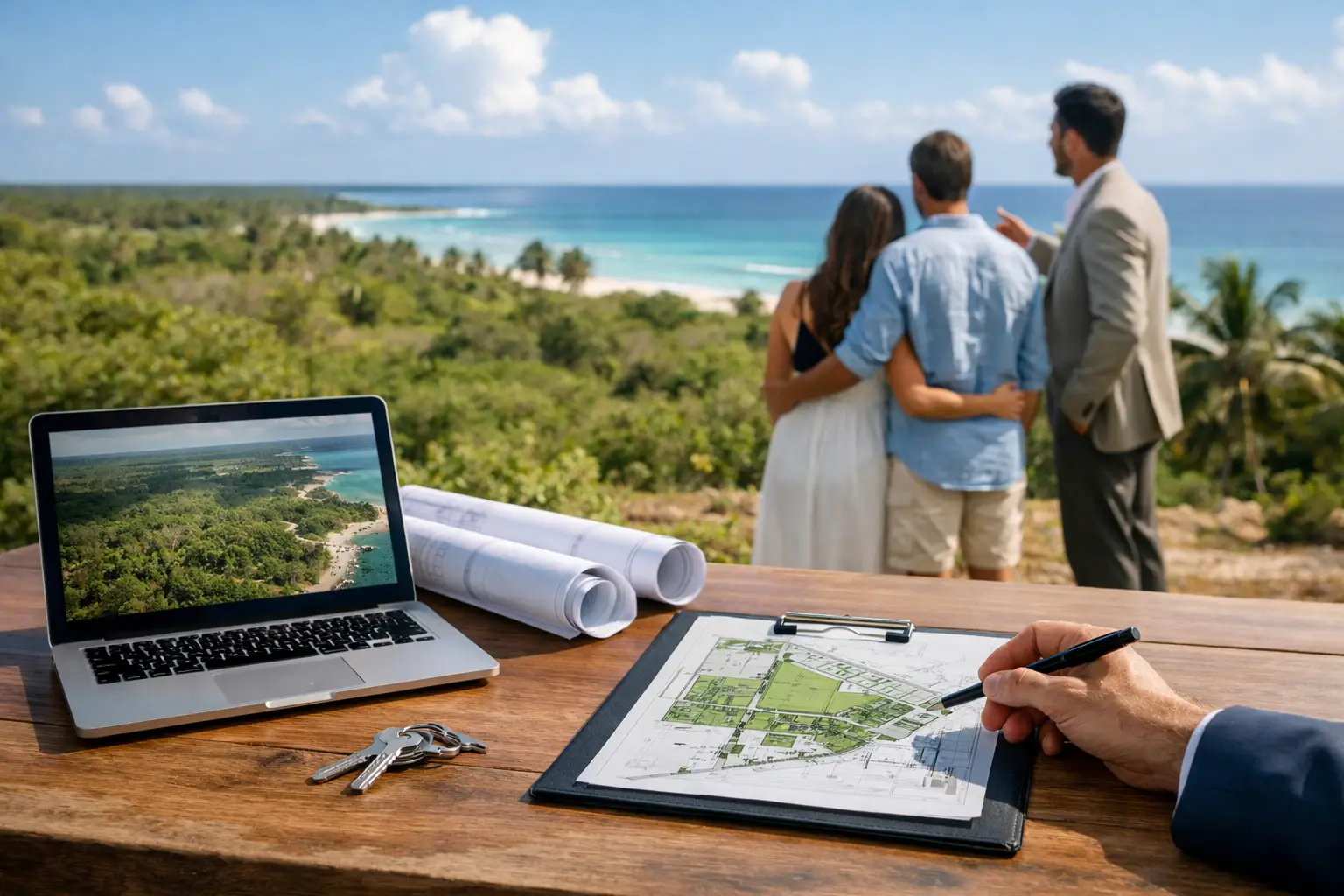
You can fall in love with a Riviera Maya parcel in ten minutes. You can also inherit ten months of headaches if you skip the paperwork. That is why Riviera Maya land due diligence is not a boring legal formality – it is the part that protects your capital, your timeline, and your future exit.
For foreign buyers, land can look like the highest-upside play in Quintana Roo. In many cases, it is. Population growth, tourism demand, airport expansion, road upgrades, and continued interest in Tulum, Playa del Carmen, and surrounding corridors have supported long-term land appreciation. But land is not a condo. It does not come with a front desk, rental history, or a clean developer brochure that tells the full story. You need to verify what you are actually buying, what you can build, and what could stop you from monetizing it.
What Riviera Maya land due diligence really means
Land due diligence is the investigation you complete before closing. The goal is simple: confirm ownership, legal transferability, permitted use, physical access, infrastructure reality, and financial viability.
In Riviera Maya, that process matters even more because not all land carries the same risk profile. A parcel near a growth corridor may look ideal on a map, but zoning can limit density. Utilities may be farther away than expected. Access roads may be informal. Environmental restrictions may affect clearing or construction. In some cases, the issue is not fraud. It is mismatch – what the seller believes, what the broker says, and what the documents actually support are not always the same thing.
If you are a Canadian or American investor used to a more standardized process at home, Mexico can feel less familiar at first. That does not mean it is unsafe to invest. It means you need a structured process and the right professionals, including a notario and qualified advisors, before you wire funds.
Start with title and ownership history
The first question is not whether the land is beautiful. It is whether the seller has the legal right to sell it.
A proper review should confirm the current owner, prior chain of title, recorded boundaries, existing liens, encumbrances, and whether the asset is private property that can be legally transferred. This is especially important in areas where buyers hear terms like ejido land without fully understanding the implications. Some parcels have gone through regularization, some have not, and the distinction matters.
For foreigners buying in Mexico, structure matters too. In the restricted zone near the coast, acquisition is commonly done through a fideicomiso, which is a bank trust that allows foreign buyers to hold beneficial rights to residential property. If the intended use is commercial or development-focused, entity structure may also come into play. That decision should be reviewed with a notario and tax advisor based on your goals.
A clean title review is not glamorous, but it is where serious investors separate opportunity from avoidable risk.
Why title review is not enough by itself
Even if title is clean, the land can still be a weak investment. You also need to confirm whether the parcel can support your business plan. Buying land for future villas is very different from buying land for a boutique condo project, mixed-use commercial concept, or long-term hold near infrastructure expansion.
That is where zoning, density, and land use become central.
Zoning, density, and development rights
One of the most common mistakes foreign buyers make is assuming location alone creates value. In reality, usable value comes from what you are legally allowed to build.
Riviera Maya land due diligence should include a review of municipal and state-level land use rules, zoning classification, density allowances, height limits, setbacks, and any environmental overlays that may affect development. A parcel advertised as “great for condos” may turn out to support far fewer units than your underwriting assumes.
This is where projected returns can shift quickly. If your original model was based on twenty keys and zoning supports twelve, your land basis may no longer make sense. The reverse can also happen. A parcel that looks underwhelming to the casual buyer may have stronger permitted use than nearby alternatives, which creates hidden upside.
For investors comparing Mexico with Canada or the U.S., this is one reason Riviera Maya still attracts attention. Entry costs can be lower, lifestyle demand is strong, and certain growth corridors benefit from public and private infrastructure investment. But those advantages only work in your favor if the land supports the exact strategy you plan to execute.
Physical access and infrastructure are where deals get real
Maps flatter a lot of land.
A parcel can appear close to a main road, utilities, or urban services, yet still face practical constraints. During due diligence, you want clarity on legal access, road conditions, electricity availability, water service or well feasibility, drainage, internet options, and wastewater requirements.
This directly affects both cost and speed. If power is not nearby, extension costs can reshape your pro forma. If road access is seasonal or informal, lenders, contractors, and future buyers may see the parcel differently than you do. If drainage is poor, build costs rise. If your exit depends on buyers wanting turnkey convenience, missing infrastructure can reduce marketability.
This is especially relevant for pre-development and land banking strategies. Some investors do very well by entering early, before full infrastructure arrives. But that approach requires patience, a longer hold period, and tolerance for uncertainty. If you want near-term development, your checklist needs to be much stricter.
Environmental and regulatory review
In Quintana Roo, environmental review is not optional. It is part of understanding what can actually be done on the property.
Depending on the parcel, you may need to evaluate protected vegetation, wetlands, topography, soil conditions, and any federal or local restrictions. You should also review whether permits will be required for clearing, construction, or change of use. This is one of those areas where buyers can become overly optimistic because nearby projects create a false sense of certainty.
The fact that something was built nearby does not guarantee the same pathway for your site.
A careful review here can protect you from expensive redesigns later. It can also help you identify parcels that are more development-ready than competing sites, which often matters more than a lower asking price.
Financial due diligence: underwriting the land, not the dream
Land investing attracts vision. Vision is useful. Underwriting is what keeps you solvent.
Before closing, run a grounded model that includes acquisition costs, trust or entity setup costs, notario fees, closing costs, holding costs, taxes, infrastructure work, design and permitting assumptions, and a realistic timeline buffer. Avoid the temptation to understate carrying costs just because the land itself feels inexpensive compared with home markets.
This is also where your strategy should connect to local demand. If your plan is to build and hold, study rental performance in the surrounding market. In parts of Playa del Carmen and Tulum, stabilized net yields may range around 6-12% depending on asset type, management quality, and seasonality. That does not mean your future project will perform at the same level. It means market demand exists, but your product, positioning, and operations will determine where you land in that range.
If your plan is resale, test your exit against absorption, new supply, and buyer profile. End users, retirees, digital workers, and investors do not buy for the same reasons.
A practical Riviera Maya land due diligence checklist
The smartest buyers move through due diligence in layers. First confirm ownership and transferability. Then verify zoning and intended use. Then validate access, utilities, and site conditions. Finally, test the numbers against a realistic business plan.
You do not need to become a Mexican land attorney overnight. You do need a process. That usually includes a notario, local legal review, tax guidance, survey verification where needed, and commercial-level underwriting. If the deal involves development, add technical review early rather than after you are emotionally committed.
A strong investor takeaway is this: the best land deal is rarely the one with the lowest price per square meter. It is the one with the clearest path from acquisition to use, income, or exit.
FAQ
Can foreigners buy land in Riviera Maya?
Yes. Foreigners can buy property in Mexico, including land, but the ownership structure depends on the location and intended use. In coastal restricted zones, a fideicomiso is commonly used for residential ownership. You should confirm the correct structure with a notario and tax advisor.
What is the biggest risk when buying land in Riviera Maya?
The biggest risk is assuming the parcel can be used the way it was marketed without independently verifying title, zoning, access, and environmental constraints. Most costly mistakes begin with skipped verification.
How long does land due diligence take in Mexico?
It depends on the parcel, document quality, and complexity of the intended use. Straightforward reviews may move relatively quickly, while parcels needing deeper title, zoning, or environmental confirmation can take longer. Rushing this stage usually costs more later.
Is land better than buying a condo in Riviera Maya?
It depends on your timeline and risk tolerance. Land can offer stronger appreciation upside, especially in growth corridors, but it usually requires more patience, more verification, and more active planning. Condos can be simpler for buyers focused on rental income and remote ownership.
If you are still figuring out whether land, pre-sale, or cash-flow property fits your goals, take the Investor Readiness Scorecard. It is a smart first step before you choose a market, a structure, or a timeline.
Riviera Maya is still in a phase where infrastructure, migration, and global diversification trends are creating real opportunity. But windows like this do not stay wide open forever. The buyers who move with the most confidence are not the fastest. They are the most prepared.
