
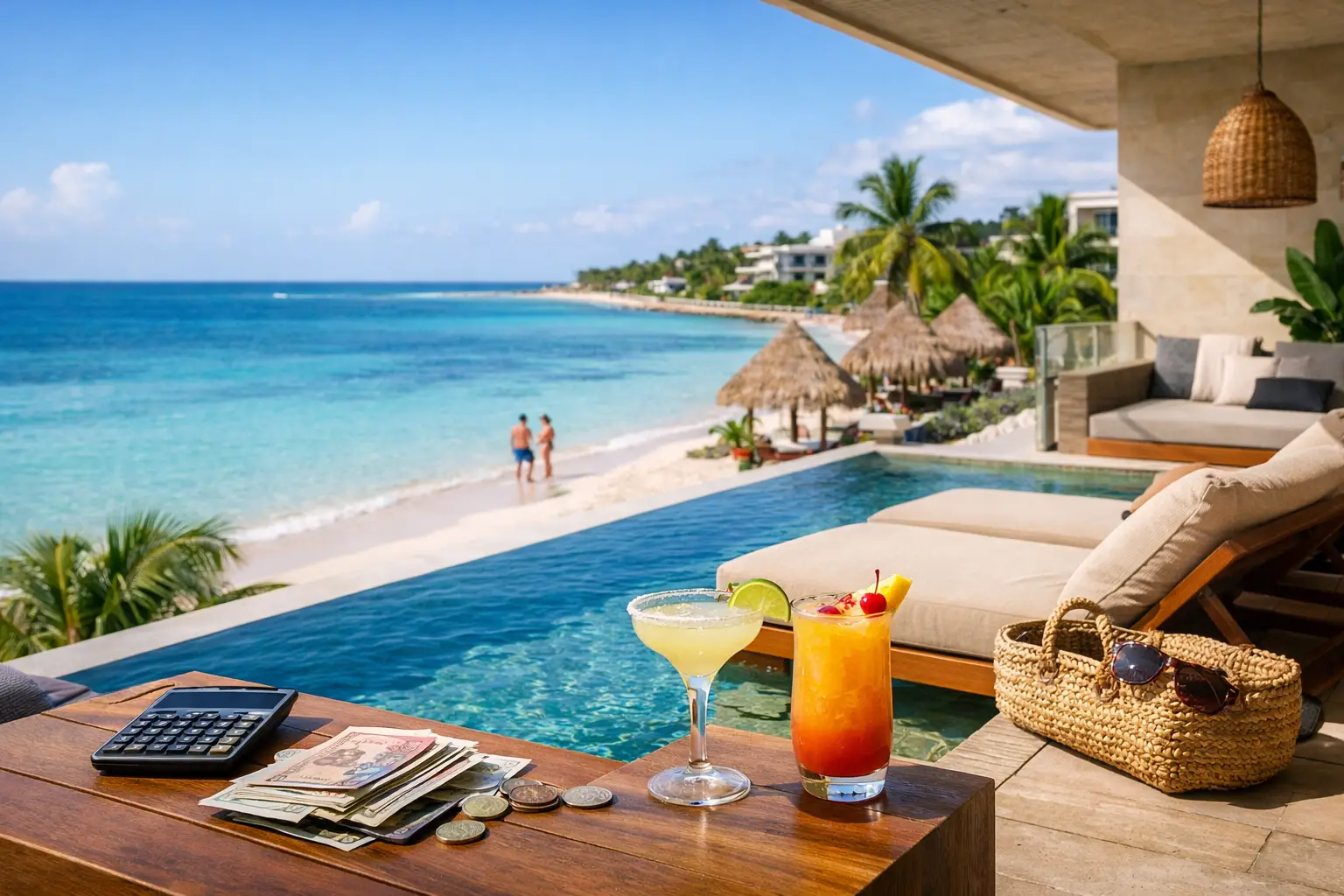
Your budget does not need a trust fund tan to work in Riviera Maya. If you are asking, can i live on $3,000 a month in riviera maya?, the short answer is yes – and for many Americans and Canadians, that budget supports a comfortable life with choices, not just survival.
The real question is what kind of life you want to build. Riviera Maya is not one single cost-of-living category. Playa del Carmen, Tulum, Puerto Morelos, Akumal, and Cancun all behave differently. A beachfront, short-term rental lifestyle with daily brunches and constant taxis is one number. A more strategic expat lifestyle with a year lease, some local habits, and planned spending is another.
That difference matters because Riviera Maya is no longer a hidden bargain. It is a fast-growing corridor backed by tourism demand, infrastructure investment, and international migration. Quintana Roo has remained one of Mexico’s strongest tourism and housing markets, and that growth supports both lifestyle appeal and long-term real estate demand.
Can you live on $3,000 a month in Riviera Maya comfortably?
In most cases, yes. A monthly budget of $3,000 can cover rent, groceries, utilities, dining out, transportation, health insurance, and still leave room for travel, entertainment, or savings. For a single person, it can feel quite comfortable. For a couple, it is still realistic if you choose housing carefully and avoid the most premium zones.
A practical range for many expats looks like this: rent from about $900 to $1,600 for a well-located one- or two-bedroom long-term rental, utilities and internet from $100 to $250 depending on air conditioning use, groceries around $300 to $500, dining and social life between $250 and $600, local transportation from $50 to $250, and private health insurance often ranging from roughly $100 to $300 per person depending on age and coverage.
That means many households land somewhere between $1,900 and $2,800 before discretionary spending. If you like frequent weekend trips, imported groceries, upscale gyms, and beach clubs, you can absolutely spend more. Riviera Maya has a talent for making “just one drink” become a lifestyle category.
What $3,000 a month looks like by area
Playa del Carmen is often the easiest entry point for balance. It has stronger everyday infrastructure than some smaller beach towns, walkable neighborhoods, solid healthcare access, and a broad range of rental options. You can live well there on $3,000 a month, especially if you rent outside the most tourist-heavy blocks.
Tulum is more variable. If your idea of Tulum is jungle chic, boutique fitness, coworking, and frequent restaurant spending, your budget gets tighter faster. Long-term renters who live a bit outside the most branded zones can still make $3,000 work, but Tulum rewards planning more than impulse.
Puerto Morelos and Akumal can feel calmer and often more manageable from a lifestyle budget perspective, especially for retirees or remote workers who do not need daily nightlife. Cancun gives you more urban convenience and often more housing inventory, but your neighborhood selection matters a lot.
The investor takeaway is simple: cost of living and real estate strategy are connected. The places where you can live comfortably on $3,000 are often the same places where rental demand stays resilient because they attract a broad base of tourists, digital nomads, and long-stay residents.
The trade-offs behind the numbers
Living on $3,000 a month in Riviera Maya is realistic, but the trade-offs are worth understanding before you move or buy.
Housing is usually the biggest lever. If you sign a long-term lease in local or mixed residential areas, your dollars stretch much further than if you rent a luxury unit marketed in English to short-term visitors. The gap can be dramatic.
Air conditioning is the second surprise. Many first-time movers underestimate electric bills during hotter months. If you work from home and run AC all day, utilities can climb quickly.
Then there is seasonality. During high season, the region feels busier, and some prices around tourism rise with demand. During quieter months, life can feel more local and often easier on the wallet.
This is also where Mexico vs. Canada or the U.S. becomes an eye-opener. Many buyers coming from Toronto, Vancouver, Miami, or Southern California are used to much higher housing costs, insurance bills, and property taxes. Riviera Maya may still offer a better lifestyle-to-cost ratio, even after factoring in private healthcare and imported goods.
Renting first vs buying in Riviera Maya
If your plan is to test the lifestyle, renting first makes sense. It gives you time to learn neighborhoods, understand humidity and traffic patterns, and decide whether you prefer beach access, walkability, or a quieter residential feel.
But if you already know you want to spend significant time in the region, buying can become a strategic move. Instead of paying rent indefinitely, some foreign buyers use part-time occupancy and professionally managed short-term rentals to offset carrying costs. In markets like Playa del Carmen and Tulum, well-selected condos can target net yields in the 6% to 12% range, depending on location, building operations, seasonality, and management quality. That is not guaranteed income, and results vary, but it is one reason investors look here seriously.
If you buy near the coast, you will likely use a fideicomiso, a bank trust structure that allows foreigners to acquire residential property in restricted zones legally. It is standard practice, not a loophole. You should still work with a qualified notario and tax advisor so you understand setup costs, annual trust fees, and exit planning.
For many clients, the leap from “Can I afford to live here?” to “Should I own here?” happens quickly. Once you see the numbers side by side, the ownership conversation becomes less emotional and more strategic.
Can $3,000 a month support retirement in Riviera Maya?
For many retirees, yes. In fact, this is where Riviera Maya can shine. If your housing is stable and your healthcare plan is in place, $3,000 per month can support a lifestyle that feels fuller than what the same money buys in many North American cities.
You may spend less on housing, lower-cost services, and day-to-day living while gaining more outdoor time, social flexibility, and access to an international community. That said, retirement in Mexico works best when you treat it like a financial plan, not a permanent vacation. Budget for visa costs, emergency reserves, travel back home, and healthcare that matches your age and needs.
Why this matters for investors too
Cost of living is not just an expat question. It is an investor signal.
When a region allows foreign professionals, retirees, and remote workers to live well on a moderate monthly budget, it tends to support longer stays, stronger occupancy, and broader rental demand. That matters in Riviera Maya, where market growth is driven not just by tourism but by migration, infrastructure, and international capital looking for diversification.
Add in ongoing development across Quintana Roo, improved connectivity, and major global attention on the region, and you start to see why lifestyle affordability can feed investment performance. People do not only visit Riviera Maya anymore. Increasingly, they stay, buy, and build a second chapter here.
If you want to assess whether you are financially positioned to make that move, a smart next step is the Investor Readiness Scorecard. It helps you measure whether you are ready to rent, buy, or invest with more confidence.
FAQ
Is $3,000 a month enough for a couple in Riviera Maya?
Usually yes, especially with a long-term rental and moderate lifestyle spending. A couple can live comfortably on $3,000 in many areas, though luxury rentals and heavy dining out will tighten the budget.
What is the average rent in Riviera Maya?
It depends on the area, building age, amenities, and lease term. Many long-term rentals fall in the $900 to $1,600 range for comfortable one- or two-bedroom units, while premium areas can run much higher.
Is Playa del Carmen cheaper than Tulum?
Often yes for everyday living, especially when you compare long-term rental options and local services. Tulum can become more expensive faster because of lifestyle spending and newer inventory priced for international demand.
Can foreigners legally buy property in Riviera Maya?
Yes. Foreigners can legally buy property in Mexico, and in coastal areas this often involves a fideicomiso through a Mexican bank. Always confirm structure and closing details with a notario and qualified advisor.
Is it better to rent or buy first?
If you are still learning the region, rent first. If you already know your target location and want lifestyle use plus rental income potential, buying may be the stronger long-term move.
The window in Riviera Maya is still open, but it is not standing still. As infrastructure expands and more international buyers look for lifestyle value, income potential, and geographic diversification, the gap between early and late decisions gets wider. The best opportunities usually reward preparation, not hesitation.